Digital Transformation in 2026 is reshaping the way organizations operate, innovate, and compete in an increasingly technology-driven world. As advancements in Artificial Intelligence (AI), cloud computing, automation, and data analytics continue to accelerate, businesses are adopting digital strategies to improve efficiency, enhance customer experiences, and drive sustainable growth.
Today, digital transformation is no longer just about implementing new technologies—it is about rethinking business models, empowering employees, and creating agile organizations that can quickly adapt to changing market demands. Whether you’re a startup, a growing enterprise, or a global organization, embracing digital transformation is essential for long-term success.
Understanding Digital Transformation in 2026
Digital transformation is the process of integrating digital technologies into every aspect of an organization to improve operations, enhance customer experiences, and create new business opportunities. Rather than simply digitizing existing processes, it involves fundamentally rethinking how an organization functions.
In 2026, digital transformation extends beyond technology adoption. It focuses on building intelligent, connected organizations that can rapidly adapt to changing market conditions while continuously delivering greater value to customers.
Modern digital transformation typically includes:
- AI-powered business operations
- Cloud-based infrastructure
- Intelligent automation
- Data-driven decision-making
- Connected digital ecosystems
- Customer-centric innovation
- Sustainable business practices
Why Digital Transformation in 2026 Matters
Increasing Customer Expectations
Customers expect businesses to deliver personalized, seamless, and consistent experiences across every digital touchpoint. Whether interacting through websites, mobile applications, social media, or customer support channels, they want quick responses and services tailored to their individual needs.
Organizations that fail to meet these expectations risk losing customers to competitors offering more convenient digital experiences.
Rapid Technological Innovation
Technology continues to evolve at an unprecedented pace. Innovations such as Artificial Intelligence, Machine Learning, Internet of Things (IoT), 5G connectivity, Edge Computing, Blockchain, and Quantum Computing are reshaping industries across the globe.
Businesses that actively embrace these technologies gain greater operational efficiency, improved decision-making capabilities, and stronger competitive advantages.
Changing Workforce Expectations
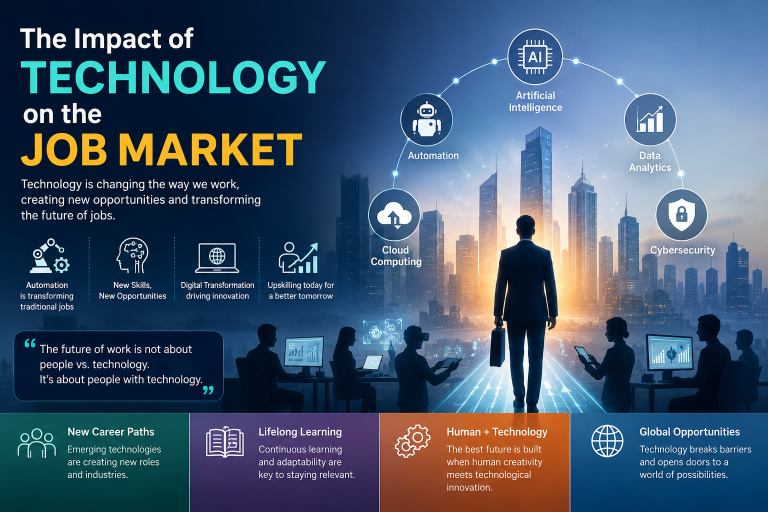
Today’s workforce values flexibility, collaboration, and opportunities for continuous learning. Remote work, hybrid workplaces, digital collaboration tools, and AI-powered productivity platforms have permanently changed how employees perform their jobs.
Organizations investing in digital workplaces not only improve productivity but also attract and retain highly skilled professionals.
Building Business Resilience
Recent global events have demonstrated the importance of organizational resilience. Companies with digitally integrated operations can respond more quickly to unexpected disruptions, maintain business continuity, and recover faster from economic or operational challenges.
Digital transformation enables organizations to become more agile in uncertain environments.
The Core Components of Digital Transformation
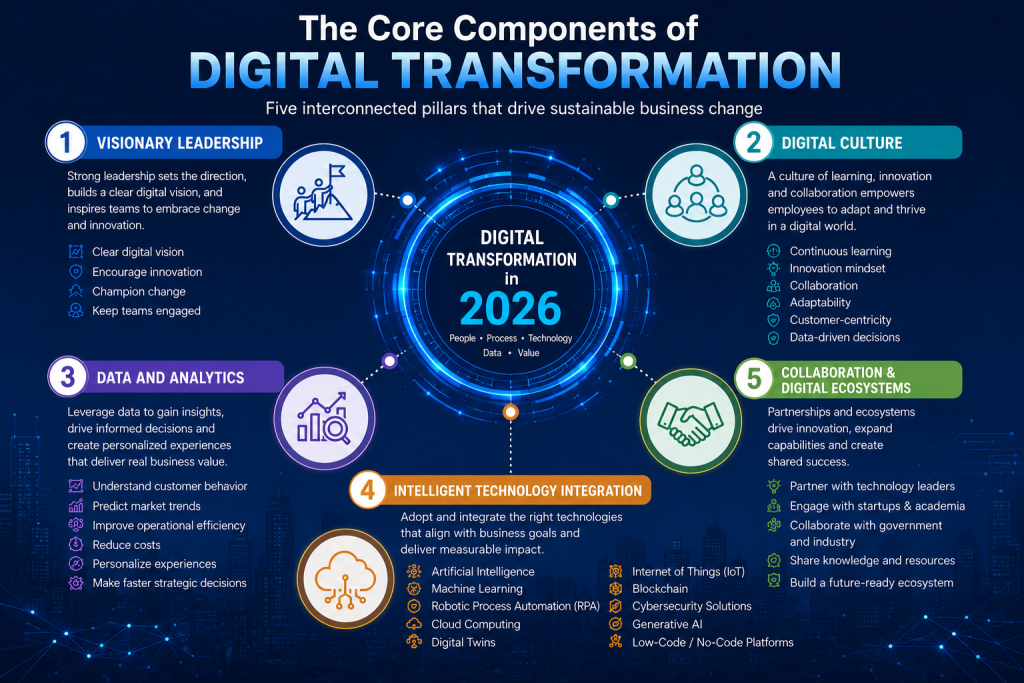
Successful digital transformation requires more than implementing technology. It involves several interconnected pillars that work together to drive sustainable change.
Visionary Leadership
Every successful transformation begins with leadership. Business leaders must establish a clear digital vision, encourage innovation, and foster a culture that embraces experimentation and continuous improvement.
Strong leadership helps organizations navigate change while ensuring employees remain engaged throughout the transformation journey.
Digital Culture
Technology alone cannot transform a business.
Organizations must cultivate a culture that encourages:
- Continuous learning
- Innovation Collaboration
- Adaptability
- Customer-focused thinking
- Data-driven decision-making
When employees embrace digital thinking, transformation becomes far more effective.
Data and Analytics
Data has become one of the world’s most valuable business assets.
Organizations that successfully collect, manage, and analyze data can:
- Understand customer behavior
- Predict future market trends
- Improve operational efficiency
- Reduce costs
- Personalize customer experiences
- Make faster strategic decisions
Advanced analytics and AI allow businesses to convert raw information into meaningful insights.
Intelligent Technology Integration
Digital transformation should always support business objectives rather than simply adopting the latest technologies.
Some of the most impactful technologies shaping businesses in 2026 include:
- Artificial Intelligence
- Machine Learning
- Robotic Process Automation (RPA)
- Cloud Computing
- Digital TwinsInternet of Things (IoT)
- Blockchain
- Cybersecurity Solutions
- Generative AI
- Low-Code and No-Code Platforms
Organizations should prioritize technologies that deliver measurable business value.
Collaboration and Digital Ecosystems
Modern businesses rarely innovate alone.
Strategic partnerships with technology providers, educational institutions, startups, government organizations, and industry experts help businesses accelerate innovation and remain competitive.
Collaborative ecosystems enable organizations to share knowledge, reduce development costs, and respond more effectively to changing market demands.
The Future of Digital Transformation Beyond 2026
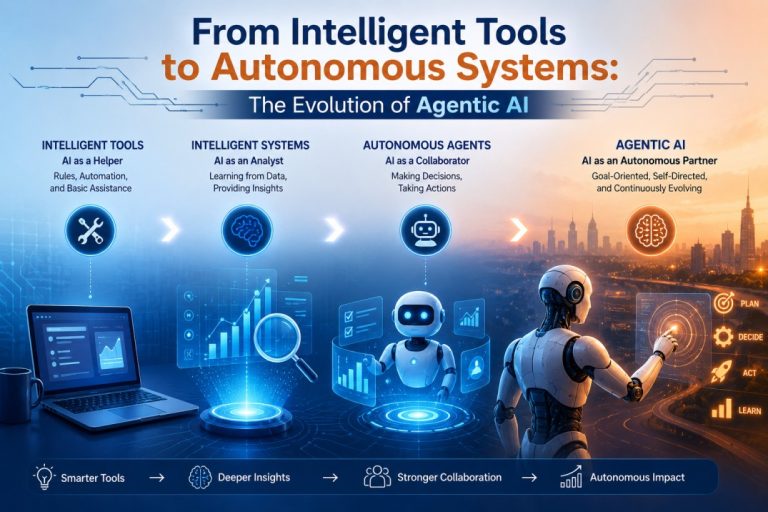
The next phase of digital transformation will be driven by intelligent automation, autonomous systems, generative AI, immersive technologies, and increasingly connected digital ecosystems.
Organizations that embrace innovation today will be better prepared for tomorrow’s opportunities. Success will depend not only on adopting advanced technologies but also on building adaptable cultures, empowering employees, and maintaining a strong focus on customer value.
Digital transformation is no longer simply a competitive advantage—it has become a fundamental requirement for sustainable business growth.
About the Author